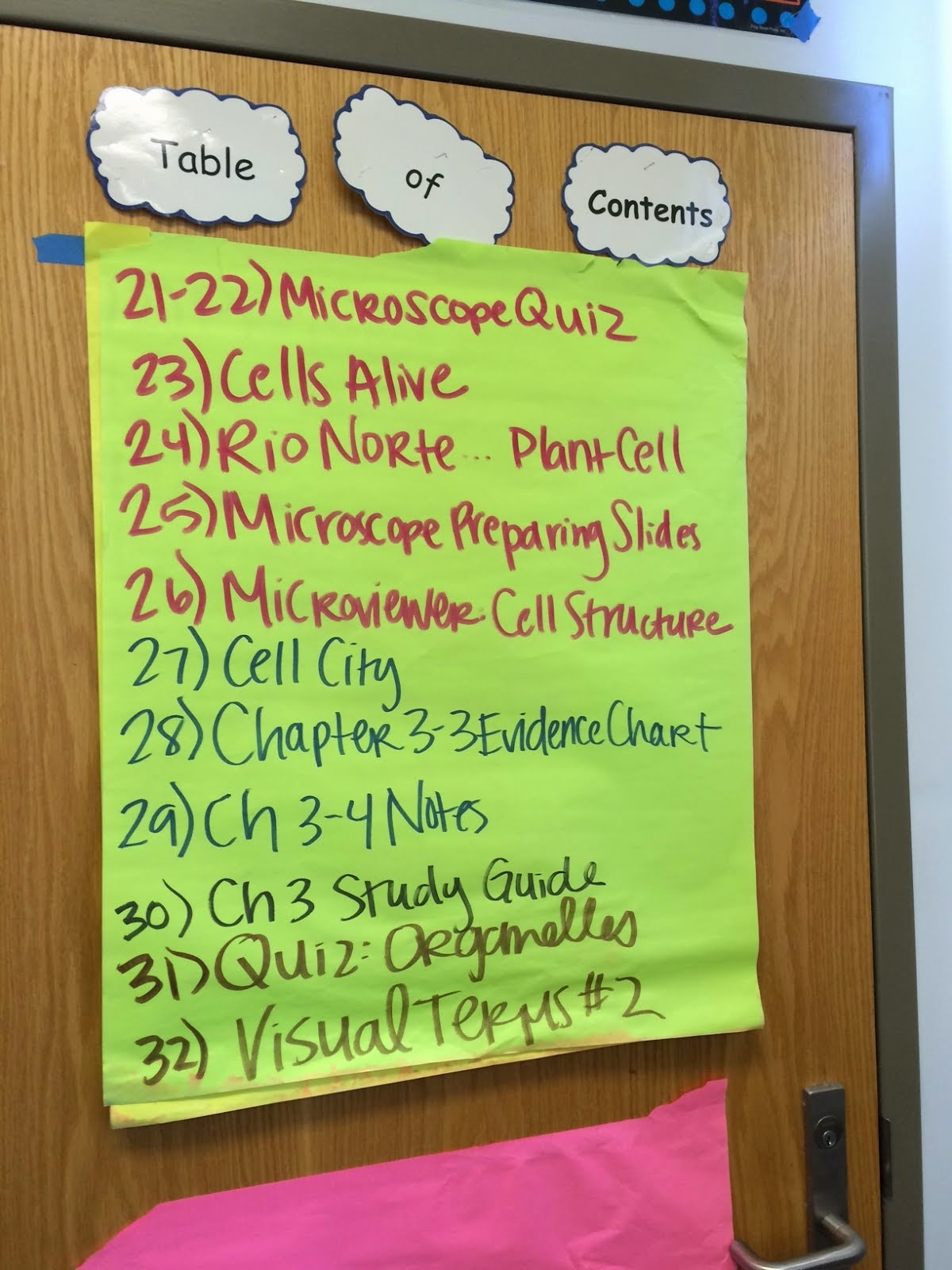
This blog is meant as a back up, students should be writing down homework daily in the binder reminder. If a student is absent, they should look in Google Classroom where everything that was passed out is posted.
Friday, November 7, 2014
Thursday, November 6, 2014
Tuesday, November 4, 2014
Monday, November 3, 2014
Tuesday, October 28, 2014
Wednesday, October 22, 2014
Friday, October 17, 2014
Tuesday, October 14, 2014
Wednesday, October 8, 2014
Friday, October 3, 2014
Monday, September 29, 2014
Thursday, September 25, 2014
Monday, September 22, 2014
Strategies for Success on Tests and Quizzes
Use these strategies to study for Science tests and quizzes
(and maybe your other classes too)!
1.
Study every night
for five nights before the test. For a
quiz, it should be 1-2 nights.
2.
Handwrite
(as in write with your hand, not typing) flash cards for key vocabulary, people, terms and dates.
3.
Study the flash
cards: Look at the term and come up with
the definition and vice versa. If you
can say the definition without looking, you are well studied on that one.
4.
Handwrite key concepts two or three times each and read them out loud
as you write them.
5.
Ask a parent or a
friend to quiz
you.
6.
Re-read all your notes
out
loud.
7.
Make a practice quiz. Turn your
note or book headings into questions:
Example: Heading “Cell Theory”
2
possible questions: “What are the three
parts of the Cell Theory?” “Who were the
three scientists who contributed to it?”
8.
Make an acrostic
poem for lists of terms to remember.
Example:
Orders of phases of cell
cycle: Interphase, Prophase, Metaphase, Anaphase, Telophase, Cytokinesis
In Paris
Many Artists Take
Chances
9.
Make up a Song
based on the facts you want to remember
to help you remember. Music uses a
different part of your brain and helps you recall information more easily.
10.Use
the notes
taken in class as well as the sections of
the textbook they go with as a basis for what to study. (Ex: Ch 3-1 Notes go with the textbook
Chapter 3, section 1 in science).
Wednesday, September 17, 2014
Tuesday, September 16, 2014
Friday, September 12, 2014
Wednesday, September 10, 2014
Monday, September 8, 2014
Thursday, September 4, 2014
Tuesday, September 2, 2014
Thursday, August 28, 2014
Tuesday, August 26, 2014
Monday, August 25, 2014
Friday, August 22, 2014
Wednesday, August 20, 2014
Monday, August 18, 2014
Friday, August 15, 2014
Saturday, May 17, 2014
Wednesday, May 14, 2014
Monday, May 12, 2014
Monday, May 5, 2014
Visual
Terms #10
1)
species
2)
adaptation
3)
overproduction
4)
variation
5)
competition
6)
natural
selection
7)
mold
8)
index
fossil
9)
petrified
fossil
10)
trace
fossil
11)
Cast
12)
Classification
13)
Binomial
nomenclature
Friday, May 2, 2014
Thursday, April 24, 2014
Monday, April 21, 2014
Tuesday, April 15, 2014
Bibliography Directions
Go to easybib.com
Click on the "Web" or "Book" tab (whichever you'd like to cite).
For a web source, go to the website you used, copy and paste the web address into the bar on easybib.
For a book source, type the title into the bar on easy bib.
Click Cite It.
It should say it found something, if it did, click continue, if it doesn't, go back a page and click on "Maunal Entry" under the bar you just copied into.
Enter any information needed (that you can find, there might be some info missing, and that's ok).
Click Create Citation
In a box, you will see your citation. Copy and paste it into a google doc (Control, V for pasting in docs).
When you have all of your citations in your doc, alphabetize by the first letter of the citation.
Make sure you have a space between each citation, a title (Bibliography), and your name.
Print
Click on the "Web" or "Book" tab (whichever you'd like to cite).
For a web source, go to the website you used, copy and paste the web address into the bar on easybib.
For a book source, type the title into the bar on easy bib.
Click Cite It.
It should say it found something, if it did, click continue, if it doesn't, go back a page and click on "Maunal Entry" under the bar you just copied into.
Enter any information needed (that you can find, there might be some info missing, and that's ok).
Click Create Citation
In a box, you will see your citation. Copy and paste it into a google doc (Control, V for pasting in docs).
When you have all of your citations in your doc, alphabetize by the first letter of the citation.
Make sure you have a space between each citation, a title (Bibliography), and your name.
Thursday, April 3, 2014
ANIMAL PROJECT!!!
Happy 4th quarter everyone! Please accept my sincerest apology for not posting much lately! Since we have been working on a project, there hasn't been tons to put up here. I wanted to give everyone a reminder that after spring break you will have one more class to finish up the posters and prepare for your presentations. Presentations will happen on Wed 4/16 for A block, and Thurs 4/17 for B block. If you will not be in attendance that day, please contact me before hand so that we can work out a plan.
If you have not yet done so, please PRINT anything that will need to go on your poster BEFORE you come to school on Monday 4/14 (A), or Tuesday 4/15 (B). Don't forget your bibliography (period 3, don't worry about bibliography quite yet, I will give you guidelines on Monday).
Here are some tips as you start to think about your presentation:
Presentation Guidelines
Your job is to teach the class about the things that you learned about your
group of animals. Make it interesting, make it interactive, make it something
the rest of the class is going to want to listen to! You will be filmed, so
make sure you are prepared!
Tips:
1. Do not read off your poster. Create a script and have a copy
for each person so that you don’t have to pass it and lose your spot. Highlight your
part on your script so that you know when it’s your turn. Use phrases like “I bet you
never knew…” and “I find it interesting that…” You can also use class interaction by
asking them your questions and having them raise their hands to give answers (but
only for some of them, not all 10, it will take too long).
2. Give us a little bit of the information from your
paragraphs, questions/answers, characteristics and body systems comparison
without reading them in their entirety. Your presentation shouldn’t be more than
about 5 minutes.
3. Never turn your back to your audience! (in this
case, your audience also includes the camera.
4. Speak in a voice that will reach the farthest
person from you.
5. Use props if possible and a pointer to point out things on your poster.
Using a pointer will allow you to point and everyone else to see what you are pointing
to without you standing in front of it. Ask Miss Bretthauer for a pointer.
6. Practice. You will be more comfortable because you know what you are going
to say.
If you have not yet done so, please PRINT anything that will need to go on your poster BEFORE you come to school on Monday 4/14 (A), or Tuesday 4/15 (B). Don't forget your bibliography (period 3, don't worry about bibliography quite yet, I will give you guidelines on Monday).
Here are some tips as you start to think about your presentation:
Presentation Guidelines
Your job is to teach the class about the things that you learned about your
group of animals. Make it interesting, make it interactive, make it something
the rest of the class is going to want to listen to! You will be filmed, so
make sure you are prepared!
Tips:
1. Do not read off your poster. Create a script and have a copy
for each person so that you don’t have to pass it and lose your spot. Highlight your
part on your script so that you know when it’s your turn. Use phrases like “I bet you
never knew…” and “I find it interesting that…” You can also use class interaction by
asking them your questions and having them raise their hands to give answers (but
only for some of them, not all 10, it will take too long).
2. Give us a little bit of the information from your
paragraphs, questions/answers, characteristics and body systems comparison
without reading them in their entirety. Your presentation shouldn’t be more than
about 5 minutes.
3. Never turn your back to your audience! (in this
case, your audience also includes the camera.
4. Speak in a voice that will reach the farthest
person from you.
5. Use props if possible and a pointer to point out things on your poster.
Using a pointer will allow you to point and everyone else to see what you are pointing
to without you standing in front of it. Ask Miss Bretthauer for a pointer.
6. Practice. You will be more comfortable because you know what you are going
to say.
Tuesday, March 11, 2014
Friday, March 7, 2014
Wednesday, March 5, 2014
Monday, March 3, 2014
Subscribe to:
Posts (Atom)